
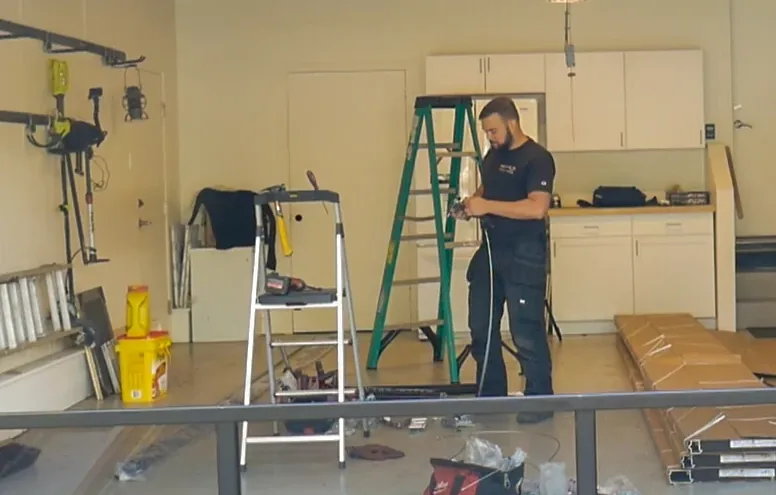
Winters in Atlantic County aren't the harshest in the country, but the mix of freezing nights, wet days, salt air and nor'easter winds is tough on garage doors. Most of the breakdowns we see in January and February start as small problems that could have been caught in the fall. Here's a simple checklist to keep your door running all season.
1. Watch and listen to your door
Open and close the door a few times. Does it move smoothly and quietly, or does it jerk, grind or slow down? Cold makes metal contract and lubricants thicken, so noise that was mild in summer can get worse in winter. Note anything unusual — it's the earliest warning sign.
2. Lubricate the moving parts
Use a garage-door-specific silicone or lithium spray on hinges, rollers (not nylon roller wheels themselves), bearings and the springs. Wipe off any excess. Avoid heavy grease, which stiffens in the cold and attracts sand and grit. Don't lubricate the inside of the tracks — keep them clean and dry instead.
3. Check the springs and cables
Look at the springs above the door for gaps in the coil and at the lift cables for fraying or rust. Cold weather makes worn springs more likely to snap. Don't touch or adjust springs yourself — they hold dangerous tension. If something looks wrong, call a professional. Our spring replacement page explains the warning signs.
4. Test the balance
Pull the opener's emergency release (with the door closed) and lift the door by hand to about halfway. A balanced door stays put. If it slams down or shoots up, the springs need adjusting — a job for a technician.
5. Inspect the weather seals
Check the rubber seal along the bottom of the door and the stop molding around the frame. Cracked, flattened or missing seals let in cold air, rain, sand and pests — and in a nor'easter, wind-driven water. Seals are inexpensive and make a big difference for attached garages.
6. Keep the bottom of the door clear of ice and debris
On freezing nights, water at the threshold can freeze the bottom seal to the floor. Running the opener against a frozen door can strain the motor or break parts. Clear water, snow and sand from the threshold, and if the door is frozen, gently free it before opening.
7. Test the safety features
Place a roll of paper towels in the door's path and close it. The door should stop and reverse when it touches the object. Then wave something in front of the photo-eye sensors as the door closes — it should reverse. If it doesn't, stop using the auto-close until it's repaired.
8. Prepare for power outages
Winter storms knock out power. Make sure everyone in the house knows how to use the emergency release to open the door manually. If you rely on your garage daily, ask about a battery-backup opener.
9. Schedule a professional tune-up
A yearly garage door tune-up catches worn parts before they fail — and shore homes, especially on the barrier islands, benefit from service twice a year. If you notice any problem on this list, call us at (609) 740-3289. We're available 24/7 across Atlantic County.